
Who controls the narrative? Traditional Media explained
News outlets create our reality, and it’s one that serves the rich and powerful – not most of us. They do that by employing several strategies, called agenda-setting, priming and framing, which we explore in this article. It’s only through awareness, critical thinking and empathy that we can become more aware and conscious consumers of news, reducing media owners’ ability to manipulate our behaviours and shape our opinions.
MEDIA
11/28/202520 min read


Models of news-making & news importance
Although we like to think of journalists as objective conveyors of information about the state of the world, for the most part, the narrative they create depends on the interests of those they serve. Unfortunately, those interests are not usually to support democracy and protect human rights, but to seek profit, shield the wealthy and politicians from responsibility, and to divide people to make it easier for the powerful to govern us.
Whether that’s through social media, radio, printed or digital newspapers or TV, most people globally consume news. According to the 2025 survey conducted for the European Commission, 87% of adult Europeans read, listen to, or watch news at least once a week, including 53% who consume it daily (2025). A survey conducted in Ghana, Kenya, and South Africa shows that 86% of respondents in those countries consume news every day (GeoPoll, 2024). While in the UK, 96% of surveyed adults claim they consume news in some form, although frequency was not mentioned (Ofcom, 2025).
Considering the scale of news consumption globally, news agencies have an immense impact on people and our perception of the world. This would not be a problem if all journalists strived for objectivity and followed journalistic ethics and standards, and if the outlets they work for were independent and objective public goods, not propaganda machines in the hands of billionaires or self-serving governments. But unfortunately, the currently prevailing reason for news making is not to be reporters of objective facts (mirror model) or to advocate for the public (professional model), but to seek profit (organisational model) and/or to represent specific interests (partisan model).
In the USA, according to the Index of US Mainstream Media Ownership compiled by Harvard University’s The Future of Media Project, as of 2021, over 70% of 176 media outlets were privately owned (for-profit companies, LLC, Hedge funds, etc.), and only around25% was registered as non-profit or were federally funded (2021). It is important to note that even the non-profits are often heavily funded by corporations and billionaires, just like the Texas Tribune, which received a $2,500,000 donation from Facebook Journalism Project and $2,267,163 from Bill and Melinda Gates Foundation, among others (ibid.). In the US, just six corporations - AT&T, Columbia Broadcasting System (CBS), Comcast, Disney, News Corp, and Viacom own 90% of all media outlets, hence can almost fully control the narrative (Nalbandian, 2022). And even social media platforms, where we all can participate in news-making and where a lot of independent journalists built their platform, are owned by right-leaning, endlessly money-hungry billionaires such as Mark Zuckerberg (Meta – Facebook, Instagram, WhatsApp), Elon Musk (X – formerly Twitter) or Larry Ellison (American version of TikTok).
In the UK, three companies control 90% of national newspaper circulation, and six companies control 71% of local newspapers, according to the ‘2023 report: Who Owns the UK Media?’ by Media Reform Coalition (2023). The same report states that ‘10 of the top 15 online platforms used to access news in the UK are owned by Meta, Alphabet and X Corp (owners of X/Twitter)’. Although the largest news outlet in the UK – the BBC – is publicly owned, it is not objective. As the same report states, it is increasingly affected by ‘political interferences’. Also in Europe, according to ‘Liberties Media Freedom Report 2025’, there’s a high media concentration, especially in Croatia, France, Hungary, Malta, the Netherlands, Slovenia, Spain and Sweden, and transparency of media ownership remains a problem (Civil Liberties Union for Europe). In Japan, the five major broadcasting firms dominate the news making (Nakamura et al. 2016), while in South Korea, ‘The four major newspaper publishers are ideologically similar’ (Kim, Kim, 2016). This is a quote from the book ‘Media Ownership in Africa in the Digital Age’:
‘The problem is that concentrated ownership of media and communication in Africa, even though of a different scope and extent, directly restricts diversity. Media concentration undermines the ability of the media to fulfil their developmental agenda. Public interest is harmed by a few owners restricting market access usually through horizontal concentration (monopolising ownership of all stages of production of media products) and vertical concentration (diversification aimed at owning and controlling more types of media) by a few national and regional companies.’
Functions of news-making
Media ownership globally is becoming increasingly concentrated, negatively affecting the diversity of news and enabling a few to control the narrative. The above-mentioned are just a few examples of how news-making is being monopolised in specific countries and regions, but the list is almost as long as the number of countries in the world. This is dangerous because news outlets have major democratic functions that they should be fulfilling to enable the emergence and existence of healthy democracies.
Those include:
‘Top-down: To inform citizens about important issues, present different policy alternatives,
Debate: Disseminate a wide range of views; stimulate discussion,
Bottom-up: Inform leaders about citizens’ preferences,
Watch-dog: Report on the actions, or inactions, of those in power.’ (Lee, 2024)
However, since most news outlets are concerned with profit-making or representing specific interests rather than contributing meaningfully to the creation of thriving democracies, they often prioritise clickbait, sensational topics and one-sided stories that push a specific agenda over objective reporting of what truly matters for people and the planet. The examples of this are countless.
One of them is the analysis by Centre for Media Monitoring (CfMM), which found that ‘Despite Gaza suffering 34x more casualties than Israel, BBC gave Israeli deaths 33 times more coverage per fatality’ while simultaneously showcasing a ‘systematic language bias favouring Israelis’ (2025). This indicates that the BBC and the state that owns it (the UK) have an interest in supporting Israel. This has been confirmed by testimonies of over 100 former and current BBC staffers speaking up about this matter (Al Jazeera, 2024).
Another case showcasing weaponisation of news making by a government comes from Poland, where Commission on Repression of Civil Society in Public Media released a report stating that in years 2015-2023, during the right-wing PiS government tenure, public media conducted regular attacks and campaigns of hate and disinformation against activists of various organizations, movements and civil society groups (Ministerstwo Sprawiedliwości, 2025). Many of the targets were women's rights activists, who opposed PiS’s law to almost entirely ban abortion in Poland, which was ultimately voted in and led to the deaths of many women. It also significantly reduced progress toward a more equal and safer environment for women in Poland. Since the protestors and civil rights organisations were opposing the government’s agenda, those in power used national media outlets to discredit activists in hopes that society at large would not join the protests.
Those examples show that many media outlets are ultimately a political and financial tool that is easily manipulated and can be swayed toward any direction, depending on the political faction that is in power or the owner’s agenda.
(Mano & Mkaouar, 2023)
Agenda-setting
Media outlets use several kinds of tools to shape people’s perceptions of the world and current affairs. Firstly, they do that by setting the agenda.
‘Agenda - The rank-ordered set of issues perceived to be most important at a given point in time.
Setting - A process in which news outlets’ agenda exerts substantial influence on the public’s agenda.’ (Lee, 2024)
The media sets the agenda for public opinion by choosing what constitutes a newsworthy story and what doesn’t. By doing that, the media influence which issues people view as important and which they view as unimportant or simply don’t even know about.
For example, by extensively covering what happened on October 7th in Israel, but barely reporting on the continuous oppression of Palestinians by Israel for almost a century, news makers ensure that people view the Zionist case as newsworthy and important. At the same time, they dehumanise Palestinians and create an impression that their lives are not as important as those of Israelis, by not covering much worse atrocities that they have been subjected to. Similarly, the almost complete absence of news about Africa or the Pacific islands in the Western media or under-reporting of the issues concerning minority groups, are not a result of their objectively lesser importance, but rather of the fact that ruling elites and media outlets’ owners either do not have anything to gain from that coverage or have something to loose if those stories are covered. Alternatively, those topics were never given much thought in the first place because of the colonial mindset that still is prevalent in the West, which conditions us to think that anything outside of the ‘Western world’ is of secondary importance and thus is not worth reporting on.
No matter the reason for not reporting on certain stories, the absence of news on certain topics is an act of setting the public agenda. That is because if people are not aware of something, it is the same as if the issue never existed in the first place. Issues, entire people and places become invisible, which perpetuates the colonial mindset that they are of secondary or non-importance. This is an extension of a long-standing ‘us vs. them’ colonial narrative that has helped to justify and maintain white supremacy and patriarchy for centuries.
The opposite is also true – when news outlets report extensively on a topic or show urgency through phrases such as ‘breaking news’, they make us consider the issue important, even if it is something that we would normally skip when reading the news. By repeatedly exposing people to certain stories, they train our schema* to consider them as important in a long-term perspective. For example, we have been conditioned to consider anything labelled as ‘breaking news’ and anything located on the front page or top of the page to be the most important piece of news. This is a result of how our schema has been programmed, and it is not of our conscious choice. News makers exploit that to carefully curate the public agenda.
As Bernard C. Cohen, political scientist and professor, put it: “News media may not be successful in telling people what to think, but they are stunningly successful in telling them what to think about.” (Cohen, 1963). That is because public opinion has a hard time comprehending the state of the real world, and knowing what is important and what is not, especially when we are not equipped with sufficient objective information to make our own judgment. Also, many of us still trust journalists to be a reliable source of information and judgment on what is important. Hence, many of us are more responsive to what appears on TV or phone screens, and we don’t give a second thought to what is omitted in the news. This way, the media’s agenda becomes the public agenda.
If news-making is mostly interest-driven, should we give it up altogether? Of course not. We still have to know what is happening in the world so as not become passive recipients of whatever is thrown at us. We must be informed, and we should care about the world in order to survive, help our societies thrive and hold those in power accountable. Also, there are many amazing journalists who, every day, expose pathologies of the world, show us real and unbiased news and convey people’s sentiments to those in power. We need news makers – they are vital for the survival of democracies and are the main tool we have to fight against injustices. Therefore, we must create a greater demand for ethical and fearless journalism – such as Zeteo, call out blatant media propaganda when we see it, and consume media in a conscious way – one in which we are able to critically assess what we consume and distinguish blatant propaganda from news making.
We could argue that in the times of social media, the agenda-setting function of news-making is not as effective as it used to be. Nowadays, people can take it upon themselves to spread the word online and, through that, make the issue prominent - even if news outlets under-report the story. One example is how much social media content is created about the situation in Gaza and Israel’s atrocious dehumanisation of Palestinians. This example showcases one of the few positive aspects of the rise of social media. However, even if some issues can receive extensive coverage through social media, the mere scale of news consumption still gives large news outlets a lot of power to control the narrative. Especially as the social media algorithms are set in a way to confirm our biases, not to see the other side of the story, therefore, we must be critical, and we must develop better media literacy.
Priming
Priming is an extension of the agenda-setting. It is ‘a process by which news coverage influences the weights that individuals assign to their opinions on particular issues when they make political evaluations, such as which candidate deserves their vote’ (Lee, 2024). In other words, issues that are extensively covered are primed in people’s minds as more important, hence impacting how we assess political figures and their performance. An example of this is the US president George W. Bush and his ‘war on terror’. Although his approval ratings were decreasing soon after he was elected, they skyrocketed when his cabinet declared a ‘war on terror’ after 9/11 and proclaimed it a victory soon after that. In 2001, the increased coverage of terrorism (priming of terrorism by news outlets) became a standard by which people began evaluating the national leader, even if they were less satisfied with his handling of other matters. Bush’s increased popularity ranking was affected by people’s increased focus on terrorism, which was primed by the media.
“The world will look different to different people, depending on the map that is drawn for them by writers, editors, and publishers of the paper they read.”
(Cohen, 1963)
By having the ability to prime people’s minds to consider some issues as more important than others, news outlets play an important role in how the issues, people or political leaders are assessed. This is a form of influencing, or even manipulating, viewers’ ability to objectively assess the situation.
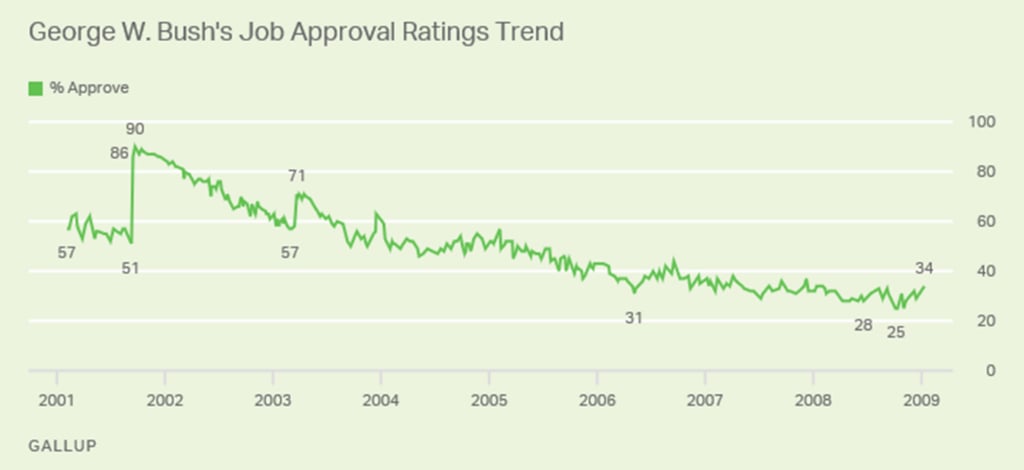
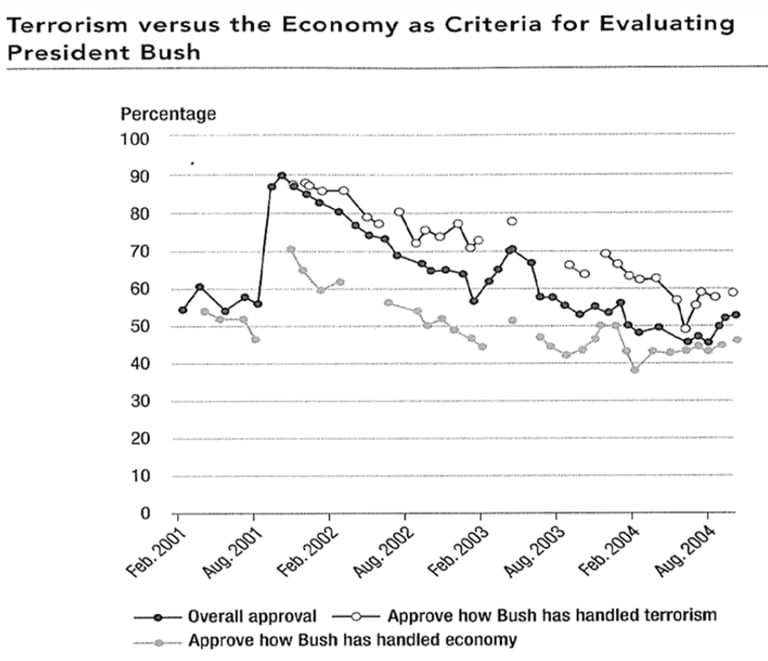
Source: Hoon Lee (2024) teaching materials for the Political Communication course taught at Kyung Hee University.
For example, during the US presidential elections in 2016 and 2024, Trump’s camp and affiliated right-leaning media outlets primed the immigration issue, scaring people into believing that if he wasn’t elected and didn’t build the wall, a dangerous ‘invasion’ of immigrants from Mexico and other Latin American countries was going to come. Playing on people’s fears worked out for Trump, as he won elections twice. Although it was not the only reason for winning, it was one of the things that gave him the edge, making a lot of people vote for him. In the process, voters were willing to overlook his sexual harassment allegations, his track record of lying and putting big business above the needs of everyday people and overlook his stance on issues that were more important for their daily lives, such as healthcare access, taxation or environmental protection.
Second term in, Trump again raised taxes for the working-class (CTBA, 2025), made 1.6 million people lose access to healthcare (Laws, 2025), and terminated between 6.9 billion and 8.2 billion USD in grants for colleges and universities (Bedekovics, Ragland, 2025). This shows how priming is effectively and strategically used in political campaigns and just how much it can impact the outcomes of elections. Therefore, we should consume news in a mindful way and always ask ourselves: ‘What is missing?’ ‘What is not mentioned?’ and ‘Who benefits from the coverage?’
Framing
Framing is about what angle is used to look at the story. By focusing on some aspects of the story while ignoring the others, the media can impact how people evaluate and perceive the event or a person. For example, when people in Berlin protested against genocide in Gaza, Reuters Connect portrayed it as violent with a headline ‘Banned Pro-Palestinian Protest Turns Violent in Berlin’ (2025) despite the attached photograph showing a peaceful protest. They also used language insinuating that protestors were in support of a proscribed terrorist group, even though no proof of that was provided. On the other hand, the same type of protest has a headline ‘German police brutality targets pro-Palestine movement‘ on Al Jazeera’s website and the UN Human Rights Office of the High Commissioner’s press release used a headline ‘UN experts urge Germany to halt criminalisation and police violence against Palestinian solidarity activism’ (2025). Contrary to Reuters Connect’s framing, Al Jazeera and UN OHCHR described it as a police brutality and anti-Palestinian sentiment issue. As this example shows, framing is a powerful tool in the hands of journalists and news outlets, and it is not always used to tell the story in an ethical way.
There are distinct types of framing. Two main ones are equivalency and emphasis framing. Equivalency framing is ‘the use of different, but logically equivalent, words or phrases to describe the same possible event or issue’ (Lee, 2024). For example, when we say ‘a woman was raped’ we put a focus on the victim, which often leads to victim blaming and deflects the responsibility from the perpetrator. But if we instead say, ‘a man committed a rape’, then the focus is on the perpetrator, and it helps to hold him accountable. Framing, and even small changes of vocabulary, e.g., (‘people on welfare’ vs. ‘poor people’) will impact how we, as readers or viewers, understand the story, and how we judge it.
The second type of framing is the emphasis framing, which is about highlighting different subset(s) of the story. One example of it was provided earlier, with the headline about protests in Berlin against genocide. It was framed by one news outlet as the violence of protesters, while by the other outlets as violence against protestors. In other words, this story is either about the systemic violation of the freedom of speech, assembly and association, or about people becoming violent out of anger at states that support and commit genocide. Either way, the story is about the fight against injustice, but one framing deflects the responsibility of states, and the other one seeks to keep them accountable. But it is not obvious from the get-go, meaning that unless we are capable of critically assessing what we read, we might become a victim of manipulative framing.
How to consciously consume news?
Firstly, it is important to know who makes our news and what their agenda is. It is very simple to know in this day and age – we simply have to look it up on the internet. This knowledge alone helps us understand how they are biased, what information they try to prime and why, what they might be omitting and why they are framing issues in a certain way.
Secondly, to see the bigger picture, we should consume diverse kinds of news or use tools such as Ground News, which compares for us how different outlets report a given story. The best way to stay informed in a conscious way is to expose ourselves to a wide range of opinions, and consuming news from diverse sources is the way to do it.
Next, we must be critical of everything we read – let’s always ask ourselves, ‘Who benefits from this narrative?’ ‘Who writes it?’ ‘What kind of language is used and from what angle is the story told?’ We must be critical and understand that what we read is almost never the full picture.
We should also observe our emotions. Is the news we consume making us feel anxious and nervous? Oftentimes, news that tries to induce this kind of reaction has a hidden agenda, so we should watch out. For example, in the White House release, it is stated that ‘America’s sovereignty is under attack’ (2025) because of immigration. The aim of these kinds of statements is to induce anti-immigrant sentiments. By definition, sovereignty is ‘the power of a country to control its own government’ (Cambridge Dictionary, no date), so unless all of those immigrants are storming local or central government and taking over full chunks of land, this rhetoric is nothing but a political play. Therefore, our emotions are often the way to understand when we’re being manipulated.
You must also know the difference between opinions and facts. Opinions are personal points of view, and facts can be backed by data, reputable sources or other evidence. For example, if a government known for spreading lies is making a statement, it is not a fact, just a nicely packaged piece of propaganda. If a self-proclaimed expert without extensive academic and/or professional knowledge on a matter speaks about the matter without citing reputable sources, it is just an opinion. If the information is provided by reputable sources – for example, the International Association of Genocide Scholars (IAGS), which is made up of all leading global genocide scholars, states that Israel is committing a genocide in Gaza – it is a fact because leading experts on that topic confirmed it based on a large data set of evidence.
What else? Fact-check if possible. You will not have time nor energy to fact-check everything, but if something feels off, check out the source the news is citing, or check what other outlets have to say about the same matter. You can also look for original source (primary source) or use fact-checking tools that are available online (although you should be mindful of who they belong to as well – for example, Google has their own, and who knows if it can be trusted).
Keep learning about the issues that matter to you. Read books, listen to podcasts, enrol in a course, dive into academic articles (but first check who created them!). Do not let the billion-dollar propaganda machine control your every thought. Learn to think for yourself – you can do that by learning, reading, and exposing yourself to diverse opinions.
How about framing? How do we know which take on the story is the most accurate?
How can we know which framing is correct, or at least is the more accurate one? It depends on what your agenda is and what you stand to gain or lose. People might argue that your stance on this case, or the way you frame an issue, depends on your political affiliation or your values. But in fact, it is a matter of power imbalances. The only issues that, from a purely practical and logical point of view, people should be concerned about are human rights and the environment.
Why? Because human rights are things that we need to survive, thrive and build equal societies and a safe world for everyone, and taking care of the environment is what we need to respect to ensure we have a healthy planet to do all of those things on.
It is usually the oppressed, whose rights are violated, and the oppressor, who violates those rights. For example, Israel is an oppressor because it commits genocide against Palestinians and crimes against humanity in the neighbouring countries. Palestinian, Lebanese, Syrian and other people attacked by them are the oppressed because their human rights are denied and violated. Those who are privileged and fear losing that privilege or power if they oppose the oppressor, resort to siding with it, even at risk of the oppressor turning against them one day. People who side with the oppressed (not only on one matter, but on most or all of them) tend to have an elevated level of empathy and value human rights. They are aware of the fact that if we allow for the oppression of one person or one group, the oppressors will exploit that over and over again to oppress more and more people to enrich themselves or to gain power. And at the end, when they face opposition, they will try to divide people and conquer – a tactic straight from the colonisers’ playbook. The way to not let that happen is to be united against the oppressor, even if it spends billions of dollars on propaganda to make other people seem like our enemies. In fact, it tends to be those with the most power and wealth who are the enemies, because they stand to lose the most if they can no longer oppress and exploit.
Therefore, 9 times out of 10, the correct answer to the question about what kind of framing is the correct one is that it is the one that sides with the oppressed. In the case of earlier cited headlines, the ones by Al Jazeera and the UN OHCHR are what we should consider to be the more accurate framing because they are in accordance with the ‘watchdog’ principle of news-making. That does not mean that every single article by Al Jazeera is going to be correct, but it shows us that maybe we should be careful about believing everything that Reuters has to say when covering the news.
Richard M. Nixon once said
“When information which properly belongs to the public is withheld by those in power, the people soon become ignorant of their own affairs, distrustful of those who manage them, and – eventually – incapable of determining their own destinies.”
Not being able to critically assess the news we are consuming, relying on only one source of information, and ignoring the independent voices of the oppressed (which are plentiful on social media) turns us into perfect victims for the propaganda and pawns in the power struggles of the oppressors. Knowledge, awareness, critical thinking and empathy are the tools that we all can obtain to stand against the oppressors and ensure that we are never again bullied into believing that the oppressed are our enemy, while they are just prey that oppressors use to continue their power grab.
We are conditioned from a young age to follow the crowd instead of thinking critically about the world. Most people don’t second-guess the media. Albeit it’s slowly changing with the blatant coverage of the genocide in Gaza, which continues to be denied and undermined by many news outlets, despite it being live-streamed to our phones for over two years. This single case has made many of us question the integrity and trustworthiness of media outlets, especially those from the ‘Western world’, including, among others, the BBC, CNN, New York Times, and many others, and it helped us realise that we must question the news we read and watch. We must hold the news makers accountable and demand that our governments end media monopoly. But most importantly, we must learn to think critically and be empathetic. That is our only weapon in the ruthless times of misinformation, propaganda and social media manipulation.
*Schema – a mental framework of preconceived ideas that helps people organise and quickly interpret large amounts of information. It acts like a mental shortcut that, over time, through repeated experiences and information exposure, creates lasting associations, patterns and categories. For example, when we hear about a natural disaster, we have a schema that likely anticipates large-scale damage, rescue operations and humanitarian needs. We know that instantly, without news agencies having to report on that. Consequently, it’s a type of automation of our brain, which impacts what we pay attention to, how we interpret the world and events around us, and how we recall information. Our schema is affected by our surroundings, cultural background or experiences, but also it can be shaped by the media and news content we consume, and how they portray the world around us. For example, if we repeatedly hear and see in news reports that immigrants are dangerous, this might become our automatic thought every time we encounter or hear about immigrants. In a sense, our schemas are a type of stereotypes we make up in our heads about particular events, people or situations.
Resources:
Al Jazeera (2024). Over 100 staff accuse BBC of bias in coverage of Israel’s war in Gaza. Available at: https://www.aljazeera.com/news/2024/11/2/over-100-staff-accuse-bbc-of-bias-in-its-coverage-of-israels-war-in-gaza [Accessed 5 Dec 2025]
Al Jazeera (2025) German police brutality targets pro-Palestine movement: Injured protester. Available at: https://www.aljazeera.com/news/2025/9/10/german-police-brutality-targets-pro-palestine-movement-injured-protester [Accessed 3 Dec 2025]
Bedekovics, G., Ragland, W. (2025). Mapping Federal Funding Cuts to U.S. Colleges and Universities. Available at: https://www.americanprogress.org/article/mapping-federal-funding-cuts-to-us-colleges-and-universities/ [Accesses 13 Dec 2025]
Cambridge Dictionary (no date). Sovereignty. Available at: https://dictionary.cambridge.org/dictionary/english/sovereignty [Accessed 11 Dec 2025]
CfMM (2025) BBC On Gaza-Israel: One Story, Double Standards. Available at: https://cfmm.org.uk/bbc-on-gaza-israel-one-story-double-standards/ [Accessed 28 Nov 2025]
Civil Liberties Union for Europe (2025). Liberties Media Freedom Report 2025. Available at: https://www.liberties.eu/f/oj-aem [Accessed 11 Dec 2025]
Cohen, B. C. (1963). The press and foreign policy. Princeton: Princeton University Press.
CTBA (2025). The ugly outcomes of the ‘Big Beautiful Bill’. Available at: https://www.ctbaonline.org/press-room/ugly-outcomes-%E2%80%98big-beautiful-bill%E2%80%99 [Accesses 13 Dec 2025]
European Commission (2025) Study on audiences, consumer behaviour and preferences relating to the consumption of media content. Available at: https://op.europa.eu/en/publication-detail/-/publication/3e5dda12-8937-11f0-9af8-01aa75ed71a1/language-en [Accessed 28 Nov 2025]
GeoPoll (2024). Social Media Vs. Traditional Media in Africa. Available at: https://www.geopoll.com/blog/social-media-vs-traditional-media-in-africa/ [Accessed 28 Nov 2025]
Harvard University (2021). Index of US Mainstream Media Ownership. The Future of Media project. Available at: https://futureofmedia.hsites.harvard.edu/index-us-mainstream-media-ownership [Accesses 11 Dec 2025]
Laws, J. (2025). 1.6 Million Americans Removed From Health Care Plan Under Trump Admin. Available at: https://www.newsweek.com/americans-health-care-plan-trump-medicaid-11140245 [Accessed 13 Dec 2025]
Lee, H. (2024) Teaching materials for the Political communication course at KyungHee University.
Mano, W., El Mkaouar, L. (2023). African Media Ownership in the Digital Age. An Introduction. In: Media Ownership in Africa in the Digital Age. New York, Routledge.
Matthews, D. (2018). How the Republican tax law hurts the poor and helps the rich, in one chart. Available at: https://www.vox.com/policy-and-politics/2018/2/26/17044440/gop-tax-cut-tax-reform-law-chart-regressive-rich-poor-graph [Accessed 13 Dec 2025]
Media Reform Coalition (2023) 2023 report: Who Owns the UK Media? Available at: https://www.mediareform.org.uk/blog/new-report-who-owns-the-uk-media [Accessed 11 Dec 2025]
Ministerstwo Sprawiedliwości (2025) Prezentacja pierwszego raportu Komisji ds. represji wobec społeczeństwa obywatelskiego w mediach publicznych (2015-2023). Available at: https://www.gov.pl/web/sprawiedliwosc/prezentacja-pierwszego-raportu-komisji-ds-represji-wobec-spoleczenstwa-obywatelskiego-w-mediach-publicznych-2015-2023 [Accessed 28 Nov 2025]
Nakamura, K. et al. (2016) Media Ownership and Concentration in Japan', Who Owns the World's Media? Media Concentration and Ownership around the World. Oxford Academic, Available at: https://doi.org/10.1093/acprof:oso/9780199987238.003.0026. [Accessed 11 Dec 2025]
Nalbandian, M. (2022). The Big Six’s big media game. Available at: https://pwestpathfinder.com/2022/05/09/the-big-sixs-big-media-game/ [Accessed 11 Dec 2025]
Ofcom (2025). News consumption in the UK: 2025. Available at: https://www.ofcom.org.uk/siteassets/resources/documents/research-and-data/online-research/adult-and-teen-news-consumption-survey/news-consumption-in-the-uk-2025-research-findings.pdf?v=400636 [Accessed 28 Nov 2025]
OHCHR (2025). UN experts urge Germany to halt criminalisation and police violence against Palestinian solidarity activism. Available at: https://www.ohchr.org/en/press-releases/2025/10/un-experts-urge-germany-halt-criminalisation-and-police-violence-against [Accessed 3 Dec 2025]
Reuters Connect (2025) Germany: Banned Pro-Palestinian Protest Turns Violent in Berlin. Available at: https://www.reutersconnect.com/item/germany-banned-pro-palestinian-protest-turns-violent-in-berlin/dGFnOnJldXRlcnMuY29tLDIwMjU6bmV3c21sX01UMVNJUEEwMDBSTkkwSUU [Accessed 3 Dec 2025]
Reuters Institute (2025). Digital News Report 2025. Available at: https://reutersinstitute.politics.ox.ac.uk/digital-news-report/2025 [Accessed 28 Nov 2025]
White House, The (2025). Declaring a national emergency at the southern border of the United States. Available at: https://www.whitehouse.gov/presidential-actions/2025/01/declaring-a-national-emergency-at-the-southern-border-of-the-united-states/ [Accessed 11 Dec 2025]